
The Master’sTrip to Scotland
24th and 25th September 2026
Simon Ellis
30 Broderers and partners joined the Master, Dr Cris Tarrant, for his 2-day trip to Scotland in September.
A highlight was visiting the Great Tapestry of Scotland, in its purpose-built home at Galashiels in the Scottish Borders. We spent the rest of the trip on an informative and enjoyable programme in the beautiful City of Edinburgh. There we had the pleasure of dining in Merchant’s Hall, while our second day featured visits to the Song School, the National Gallery of Scotland, the National Museum of Scotland and the Dovecot Studios.
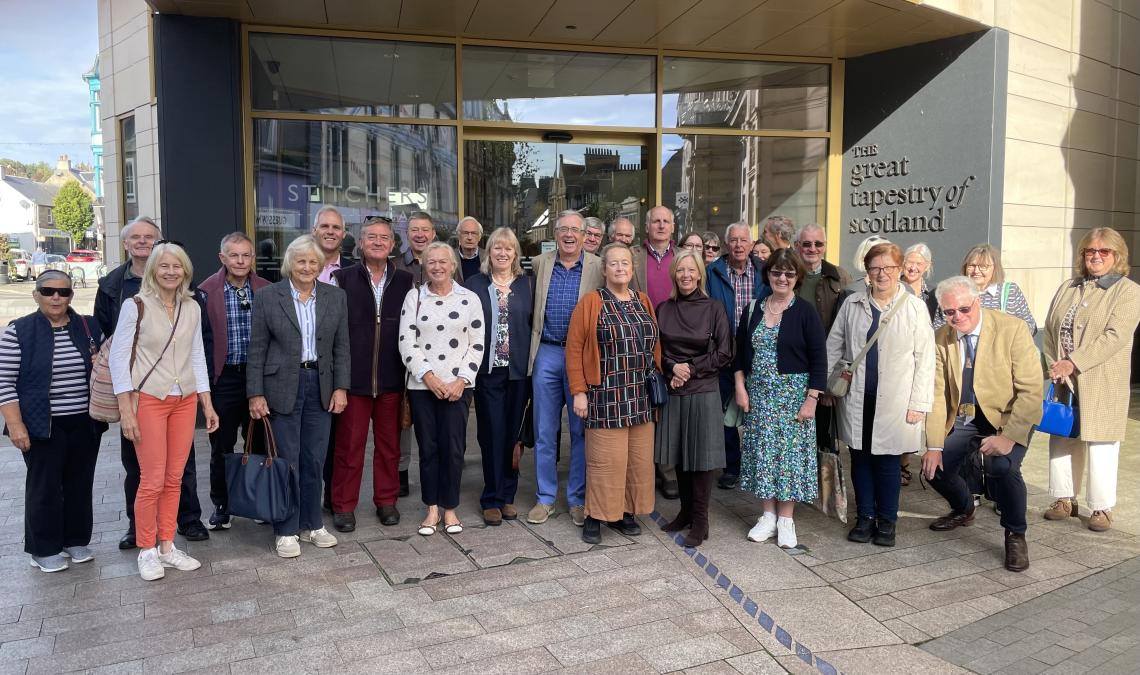
Broderers at The Great Tapestry of Scotland
The Great Tapestry of Scotland is billed as ‘one of the world’s great works of community embroidery’. It does not disappoint. It tells the story of Scotland’s history, people, legends and culture through detailed embroidery, in a series of 165 hand stitched panels. It was a genuine Scottish community effort involving over 1,000 volunteer stitchers from across the country including the remoter parts of the Highlands & Islands. In addition to the number of people involved, all the statistics are impressive: the 165 panels represent a work of art 143 metres long, contain 300 miles of wool thread, and took 50,000 hours to complete.
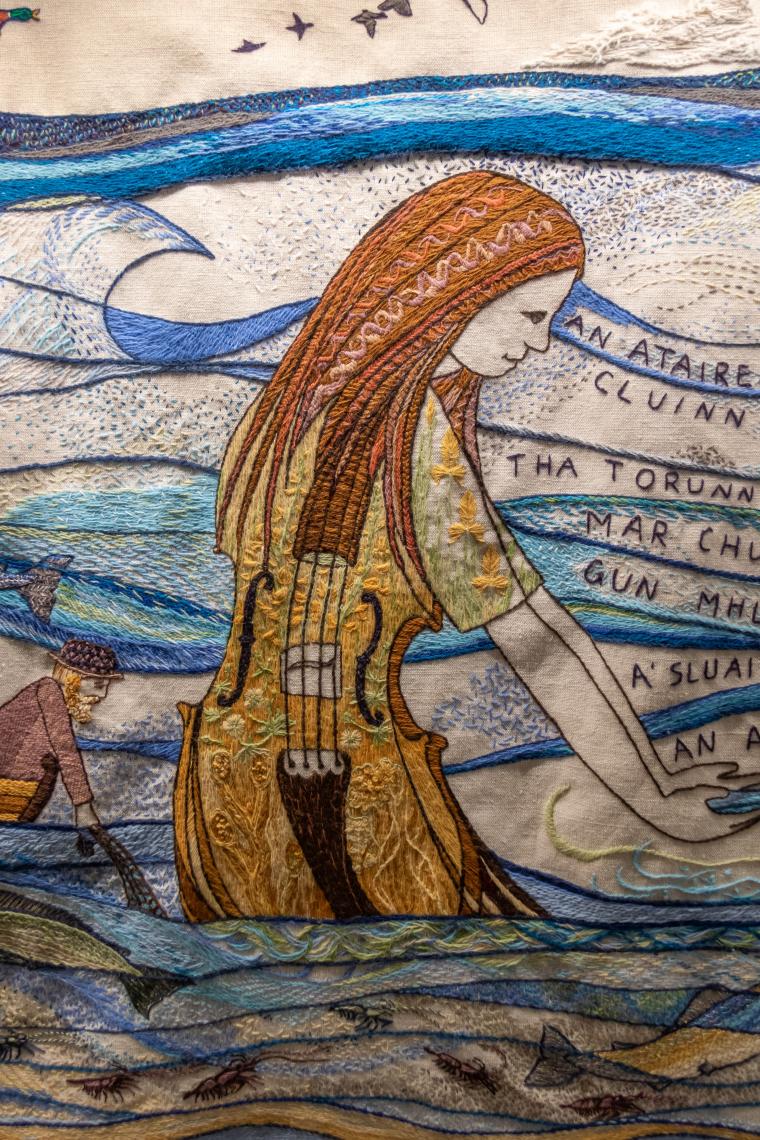
Great Tapestry
Merchants Hall is the magnificent home of The Royal Company of Merchants of the City of Edinburgh, just off Prince’s Street. As with the City of London livery companies, its origins lie in the local merchant guilds, while its current charitable and educational work has developed over several centuries. It was a pleasure to host Grant and Inez Macrae, the current Master and his consort, for a delightful black-tie reception and dinner in the Court Room of Merchant’s Hall, with a menu that featured Scottish cured salmon and venison.
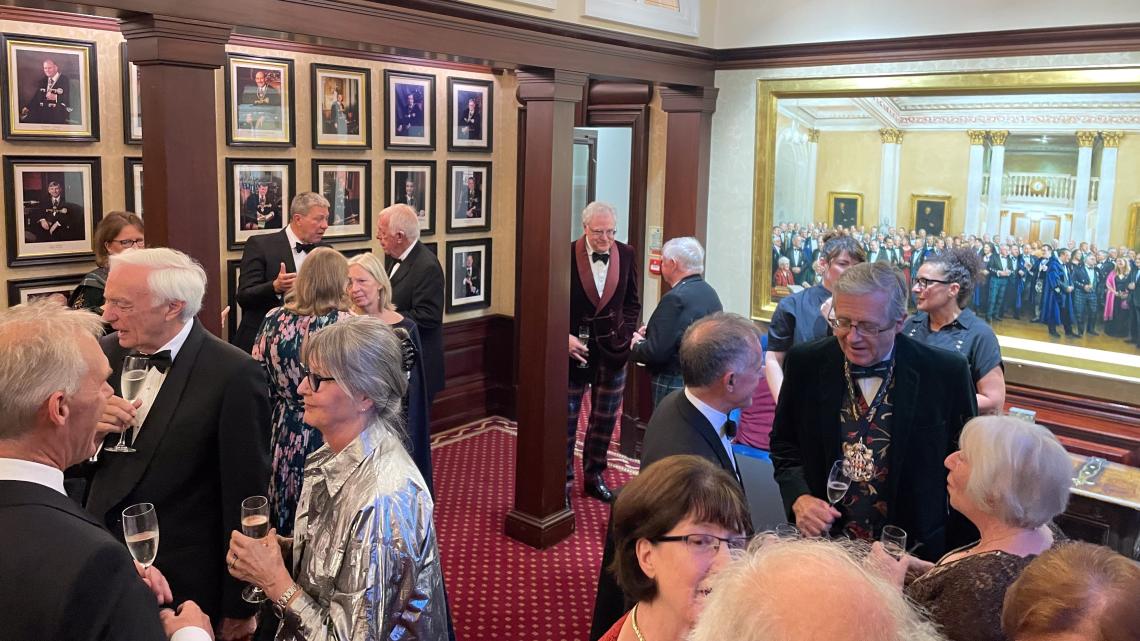
Merchants' Hall reception
For the second day we were most grateful to Dr Lynn Hulse for curating the itinerary, accompanied by Dr Elizabeth Cumming, an expert on Scottish artist Phoebe Anna Traquair. We started with a visit to the Song School at St Mary’s Episcopal Cathedral. It is one of Edinburgh’s remarkable Victorian artistic treasures, famous for its murals, painted by Traquair between 1888 and 1892. These cover the walls with angels, biblical scenes and figures associated with the cathedral choir. Dr Cumming guided us through how they transform what is essentially a rehearsal room into an extraordinary work of sacred art.
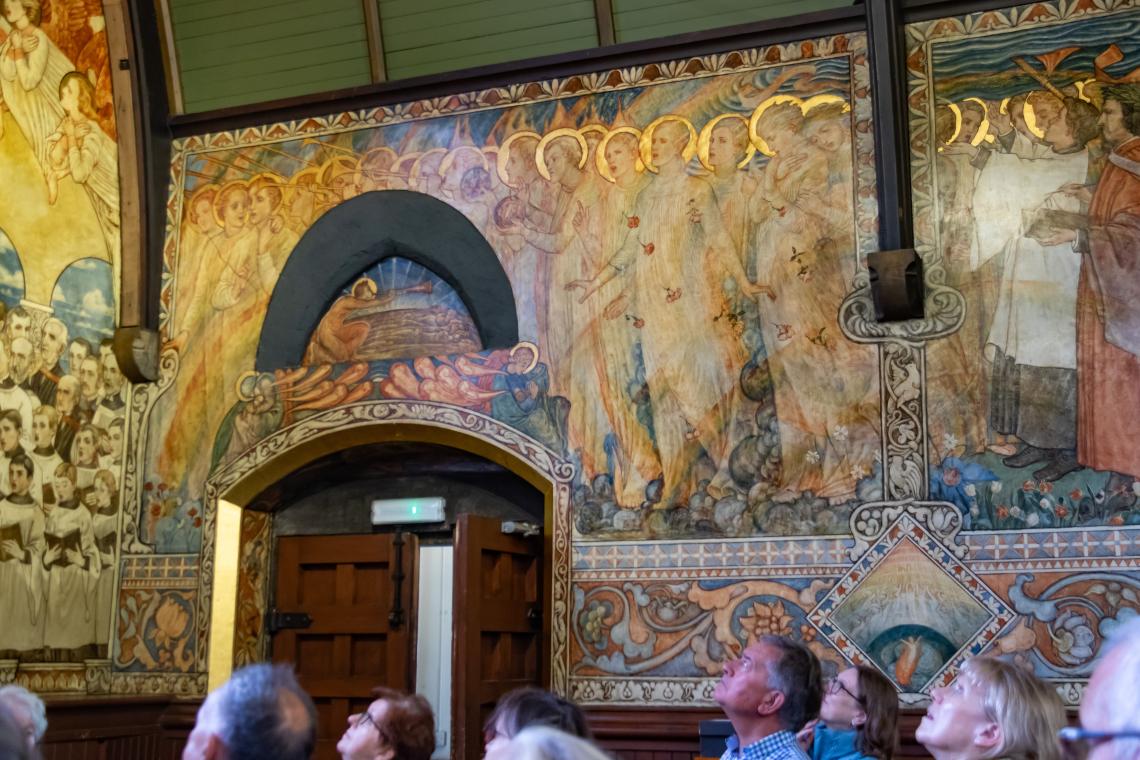
The Song School
Next we visited the National Gallery of Scotland where, under Dr Cumming’s guidance, we continued the Traquair theme by viewing her 4 embroidered panels depicting ‘The Progress of a Soul’. These are large scale embroideries worked in silk and gold thread on linen. Together the panels are an allegory of the soul passing through innocence, suffering & despair towards redemption. How wonderful to see embroidery given such prominence in a national art gallery.
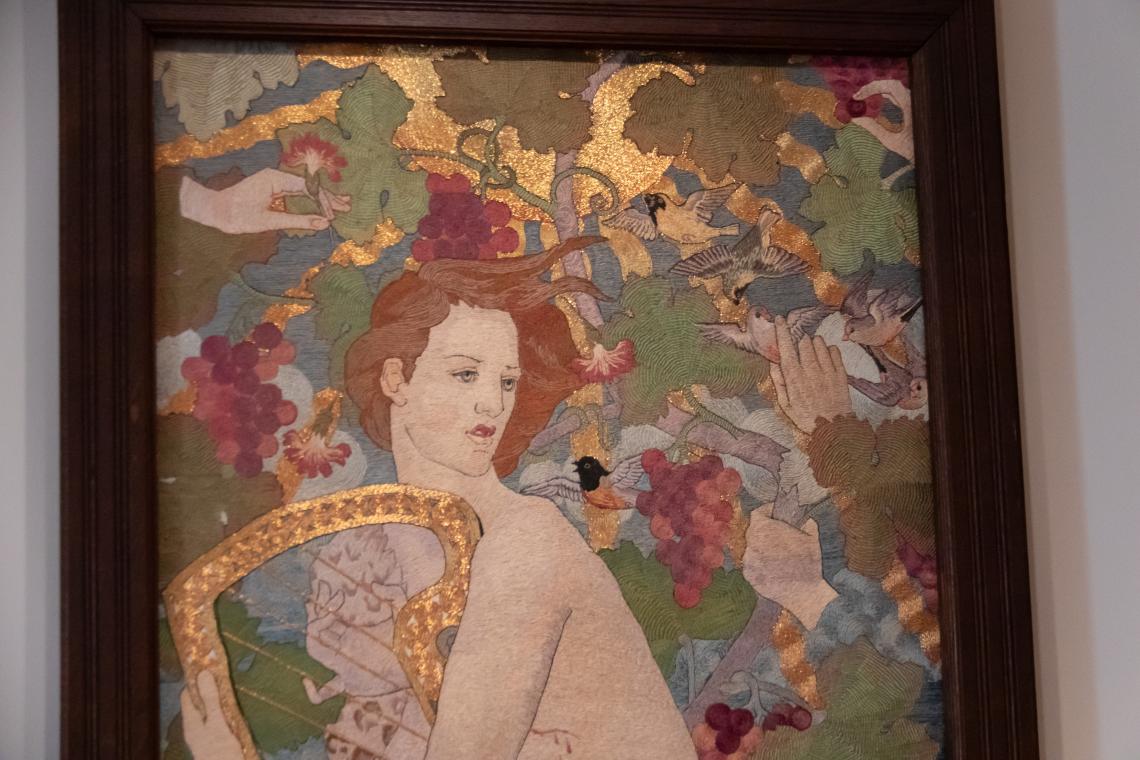
The Progress of a Soul
The final part of the formal tour was viewing the textile exhibits in the National Museum of Scotland. The museum has a rich collection of historic and modern textiles. It includes embroidery, tapestries, tartan, shawls, lace, historic dress and internationally important fashion design archives. Again, Traquair and the Arts & Crafts movement were well represented.
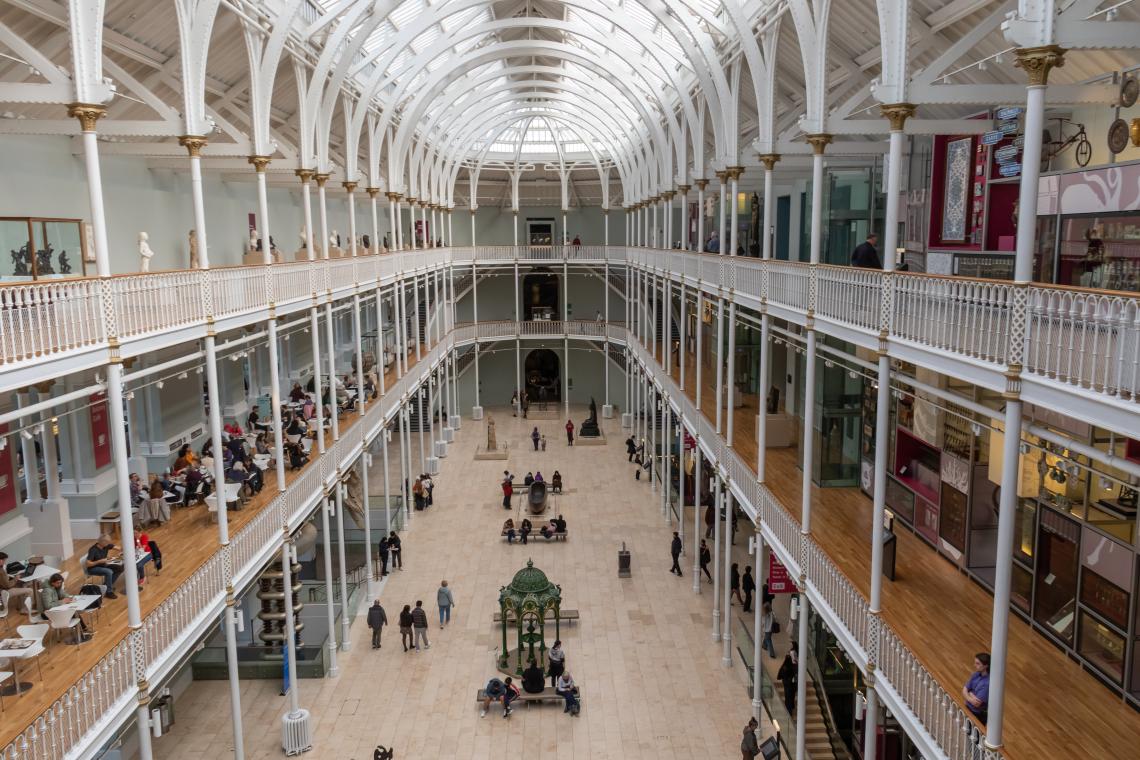
National Museum of Scotland
For those who didn’t have to peel away, a bonus was a visit to nearby Dovecot Studios. Founded in 1912 this is one of the UK’s leading centres for contemporary tapestry, textiles and decorative arts. It brings artists and master weavers together to turn original designs into handwoven tapestries and tufted rugs. It also hosts exhibitions, talks and craft workshops.
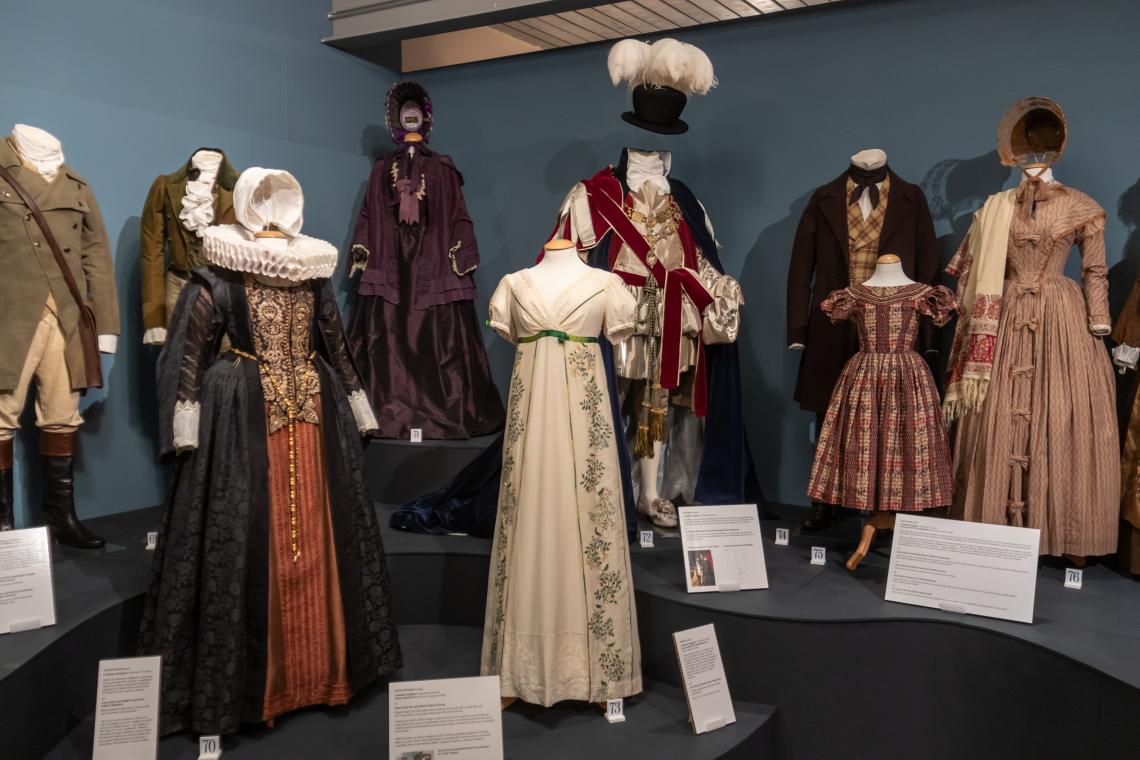
Dovecot Studio
All of us involved in the trip would like to thank the Master for an excellent, informative and thoroughly enjoyable 2 days in Edinburgh and its environs.
Photos courtesy of Simon Ellis, John Haynes, John Canning and Cris Tarrant